
Key Takeaways:
SMD and SMT are crucial to modern PCB assembly and affect design and production.
SMT can lower assembly costs in high-volume production by automating component placement.
SMD components make it easier to achieve compact PCB layouts with higher component density.
Introduction
Surface Mount Device (SMD) and Surface Mount Technology (SMT) are closely related in Printed Circuit Board (PCB) assembly, but they refer to different parts of the process. SMD describes the components mounted onto the board, while SMT refers to the method used to place and solder those components.
Understanding SMD vs SMT is important because the two work together to influence board size, production speed, component compatibility, assembly planning, and long-term reliability. A compact PCB with fine-pitch components, for example, needs both suitable SMD components and an SMT process that can place and solder them accurately.
Looking at SMD and SMT together helps ensure component choices, board design, and assembly requirements align before production begins.
What SMD Means in PCB Assembly
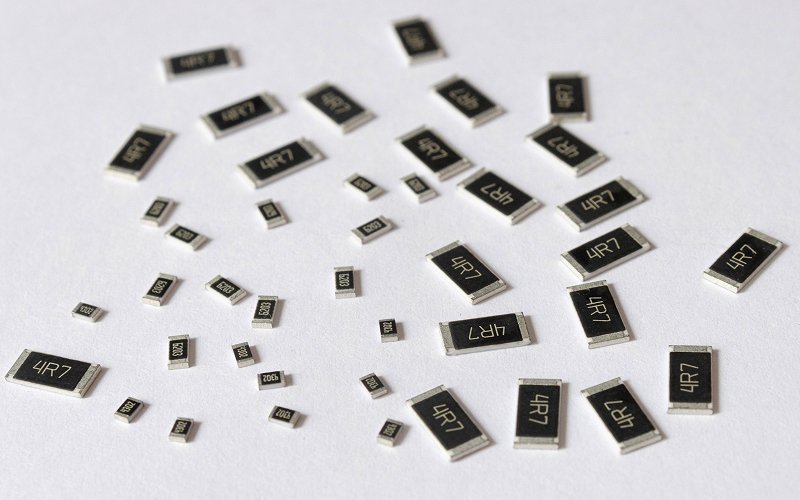
SMD stands for Surface-Mount Device. These are electronic components designed to sit directly on the surface of a printed circuit board rather than pass through drilled holes.
Common SMD components include resistors, capacitors, diodes, transistors, integrated circuits, and compact packages such as Quad Flat No-leads (QFN) and Ball Grid Array (BGA). These surface mount devices are widely used in modern electronics because they allow more functions to fit into a smaller board area.
Compared with many traditional through-hole components, SMD parts are generally smaller and lighter. This supports higher component density and more compact PCB layouts. For businesses developing consumer electronics, industrial control devices, Internet of Things (IoT) products, wearable technology, sensor modules, or space-sensitive equipment, SMD components can help reduce board size without removing required functionality.
What SMT Means in PCB Assembly
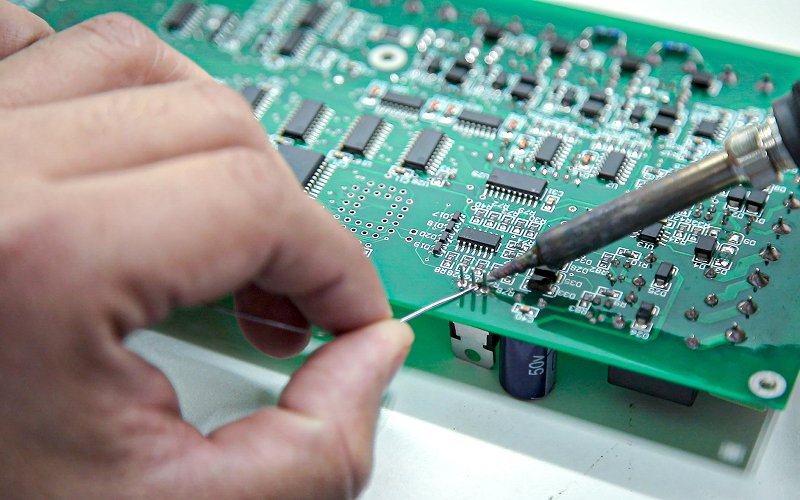
SMT, or Surface-Mount Technology, refers to the assembly method used to place and solder SMD components onto a printed circuit board.
A typical SMT workflow involves applying solder paste to the PCB pads, placing components accurately, reflowing the board, and inspecting the completed assembly. Each stage affects the final board quality. For example, too much or too little solder paste may affect joint formation, while poor placement alignment may cause opens, shorts, or weak solder joints.
SMT is commonly used in modern PCB assembly because it supports efficient and repeatable component placement. This is especially useful for boards with many small components, compact layouts, or fine-pitch packages that require precise alignment.
Why SMD and SMT Are Common in Modern Electronics
SMD components and SMT assembly are widely used because modern electronics need more functionality in smaller designs. SMD parts reduce board space, give engineers more routing flexibility, and can sometimes be placed on both sides of the PCB.
SMT supports faster, more consistent assembly across repeated builds. Once properly set up, it helps maintain placement accuracy for both prototype validation and larger production runs.
Together, SMD and SMT support compact, high-density PCB designs and efficient assembly, but reliable production depends on how well the design is prepared for manufacturing. In practice, this means checking component footprints, solder mask clearances, stencil requirements, BOM accuracy, centroid files, and other DFM details before assembly begins.
SMD vs SMT: How They Differ?
The simplest way to understand SMD vs SMT is that SMD refers to the component, while SMT is the process used to assemble it onto the PCB. Although they serve different roles, businesses need to consider both to ensure the selected components can be assembled reliably at the required production scale.
SMD Affects Component and Board Design
SMD selection influences how compact, lightweight, and densely populated a PCB can become. Smaller packages can free up board space for additional functions or help engineers meet enclosure, connector, battery, and thermal constraints.
However, package size is only one consideration. Engineers also need to assess electrical ratings, footprint accuracy, thermal behaviour, sourcing availability, solderability, and the level of assembly precision the selected component will require.
SMT Affects How the Board Is Manufactured
SMT determines how those components are placed, soldered, and inspected during production. Factors such as component pitch, pad spacing, stencil design, solder paste volume, reflow conditions, and inspection capability can all affect assembly quality.
For compact boards, the soldering process must be controlled carefully because small spacing between pads can increase the risk of bridging, insufficient solder, or misalignment. A board may use SMD components, but it still needs a suitable SMT process to attach them properly.
When SMD and SMT May Be the Right Choice
SMD components and SMT assembly suit PCB projects that require compact layouts, higher component density, and repeatable production. They can support both early prototypes and larger production runs when PCB fabrication and assembly requirements are considered together from the start.
Compact and High-Density PCB Designs
SMD components help reduce board size and weight, making them suitable for wearables, sensor boards, control modules, and handheld electronics. For dense layouts, factors such as pad spacing, solder mask clearance, and component orientation should be considered early.
Fine-Pitch, QFN, and BGA Components
SMT is especially important for fine-pitch packages such as QFN and BGA, where precise placement and controlled soldering are essential. As many solder joints sit beneath the component, reliable process control and suitable inspection methods are also critical.
Prototype to Production Builds
SMT assembly supports a consistent transition from prototype validation to repeatable production. For R&D and NPI projects, coordinating PCB manufacturing with flexible custom PCB assembly can help teams test designs efficiently before scaling to higher volumes.
Why Choosing the Right Assembly Partner Matters
SMD and SMT assembly involve more than having the right equipment. Reliable results also depend on proper component handling, controlled solder paste application, accurate placement, suitable reflow profiles, and effective inspection. A capable PCB assembly partner can review these requirements before production, which is valuable for small-batch prototypes, fast-turnaround builds, and complex boards with fine-pitch components.
For businesses comparing SMD vs SMT, practical support matters as PCB design, components, and the assembly process must work together. As a PCB supplier in Singapore, MPN Tech supports projects from prototype through production with local PCB fabrication and assembly capabilities, including manual, machine, and hybrid assembly for precision electronics.
Our local operations also allow closer coordination during R&D, NPI, and production optimisation. This can shorten feedback loops when design files need clarification, component substitutions need discussion, or urgent timelines require faster technical input.
Contact us to discuss your PCB requirements and gain a clearer understanding of SMD vs SMT before making assembly decisions.

 MPN Tech