
Introduction
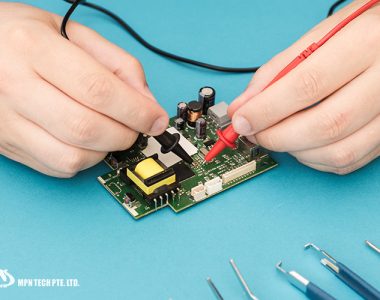
Prototype circuit boards are essential tools used to build, test, and refine electronic circuit designs before final production. They give students, hobbyists, engineers, and professionals a practical platform to test ideas, troubleshoot issues, and improve circuit behaviour before moving into a more permanent build.
In electronics development, early testing can prevent costly mistakes later. A circuit may look correct in a schematic, but real-world testing can reveal issues with component placement, power flow, signal behaviour, heat, or user interaction. By using a prototype circuit board, designers can experiment safely, identify problems early, and make improvements before investing in final production. These boards are widely used in classrooms, research labs, engineering departments, product development teams, and commercial prototyping projects.
This article explains what a prototype circuit board is, the different types available, their common uses, how they work, and how to choose the right one for your project.
Key Takeaways:
- A prototype circuit board allows users to build, test, and improve circuits before final production.
- Breadboards are ideal for quick, solderless testing, while perfboards and stripboards are more suitable for soldered, semi-permanent prototypes.
- The right board depends on project complexity, component density, durability needs, skill level, and available time.
- Proper planning helps reduce wiring errors, wasted components, poor layouts, and unreliable test results.
- Working with an experienced electronics partner can support faster prototyping, flexible customisation, and a smoother transition from testing to production.
Understanding Prototype Circuit Boards
What is a Prototype Circuit Board and What Does it Do?
Known as a protoboard, this board is a platform used to build and test electronic circuit designs before full-scale production. It allows engineers, professionals, and students to validate ideas, troubleshoot potential issues, and refine component layouts in a controlled and cost-effective manner. They are especially valuable during the early stages of development, where rapid testing and iteration are crucial.
What are the Common Use Cases of Prototype Circuit Boards?
Prototype circuit boards are used because circuit design is rarely perfect on the first attempt. Even when a schematic appears correct, the actual circuit may behave differently once components are connected.
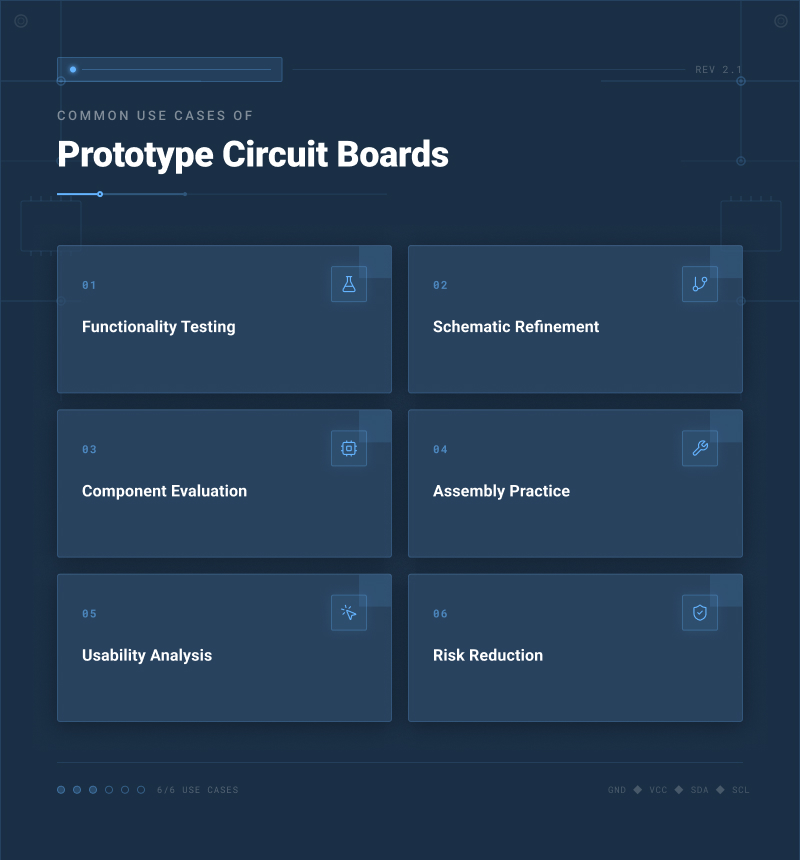
1. Functionality Testing
It helps users confirm whether the circuit works as intended before final production. This is essential for circuits involving sensors, power regulation, microcontrollers, switches, displays, or communication modules.
2. Schematic Refinement
Testing a physical prototype can reveal adjustments needed in the schematic. Component values, connection paths, grounding points, and layout decisions may need to be changed based on real-world behaviour and feedback.
3. Component Evaluation
Different components may perform differently under actual operating conditions. A prototype board allows users to test resistors, capacitors, integrated circuits, connectors, switches, and modules before selecting the most suitable parts.
4. Assembly Practice
Prototype boards provide hands-on experience in assembling and soldering circuits. This is useful for students, hobbyists, technicians, and junior engineers who need to develop confidence with physical circuit construction.
5. Usability Analysis
A circuit may function electrically, but still needs improvement in how it is used. Prototyping helps users understand how the circuit performs in real-use scenarios, including access to switches, connectors, indicators, or controls.
6. Risk Reduction
This board identifies flaws before expensive production tooling or mass manufacturing begins. Early correction can reduce wasted materials, redesign costs, delays, and product performance issues.
How are Prototype Boards Different from Final Production Printed Circuit Boards (PCBs)?
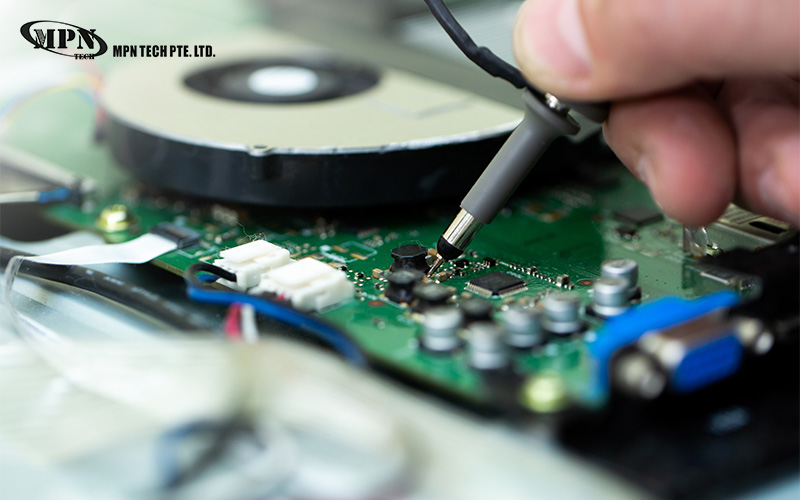
Prototype boards are designed for temporary circuit development, often with reconfigurable connections and exposed layouts for easy access and testing. They allow users to make changes, test alternatives, and troubleshoot issues without committing to a fixed final design.
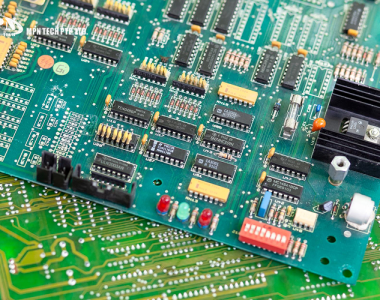
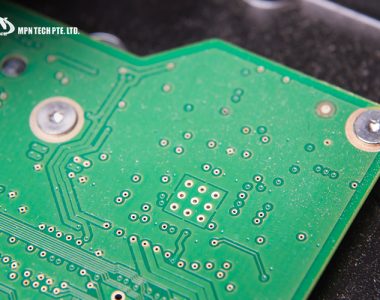
On the other hand, production PCBs are finalised, permanent circuits. They are mass-manufactured with precise layers, soldered components, and polished finishes intended for long-term use in actual devices.
Prototyping is about exploration and refinement, while production focuses on performance, reliability, and scalability. A prototype board gives designers room to experiment, but a production PCB must meet final operating requirements, assembly standards, and durability expectations.
What are the Common Types of Prototype Circuit Boards?
There are several types of prototyping boards, and each one supports a different style of circuit testing. The best choice depends on how complex the circuit is, how often the design will change, and whether the prototype is only for learning or for a near-final test.
1. Breadboard (Solderless Prototype Board)
A breadboard is a reusable, solderless board ideal for building and testing simple circuits. It features a grid of holes with internal metal clips that create temporary connections between components. This makes it one of the most beginner-friendly forms of prototype board because components can be inserted and removed without soldering. For many beginners, the comparison of breadboard vs perfboard begins with understanding that breadboards are temporary, while perfboards are soldered and more permanent.
Breadboards are easy to use and beginner-friendly. They are perfect for testing and learning because users can change the circuit quickly. They are also completely reusable, making them cost-effective for repeated experimentation.
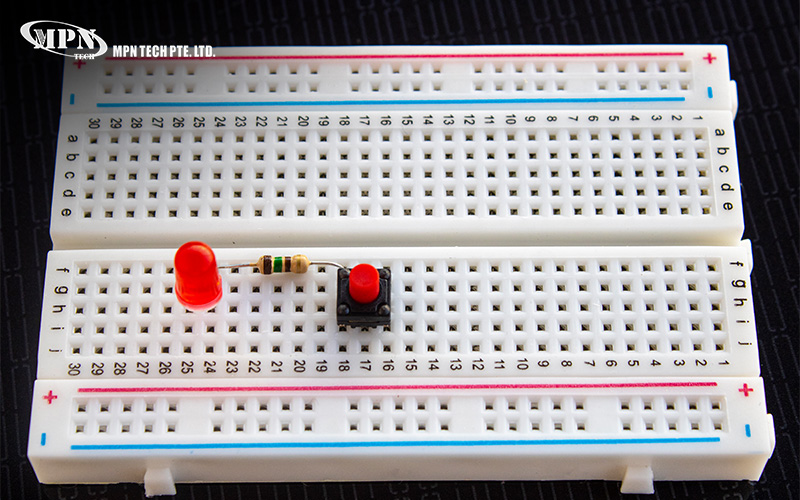
These boards are limited to high-frequency or complex circuits. They are bulky in size compared to soldered solutions. Electrical connections can loosen over time, which may cause unreliable behaviour during longer tests.
Key Features:
- No soldering is required
- Components can be added, removed, or repositioned easily
- Ideal for beginners and quick experiments
2. Perfboard (Perforated Prototype Board)
Also known as a dot matrix board, a perfboard is a non-conductive board with isolated holes. Components must be soldered in place, and connections are made using wires or solder bridges. This type of prototype board provides more permanence than a breadboard while still allowing a custom layout.
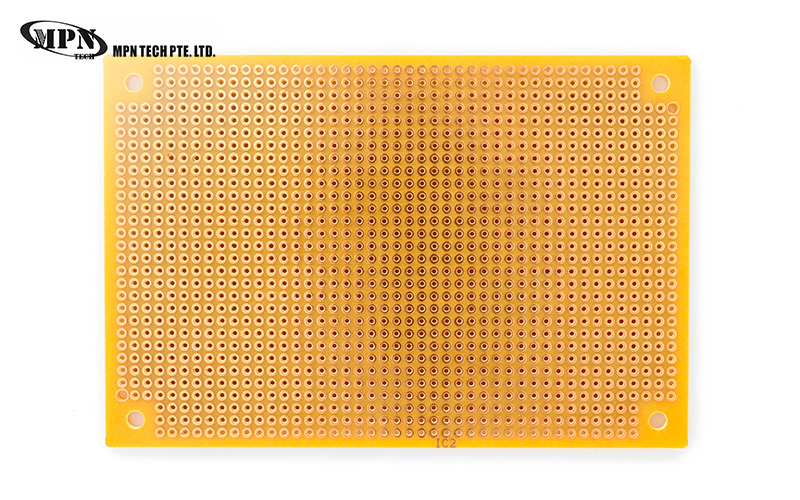
Perfboards allow custom circuit configurations. They are suitable for semi-permanent prototypes. They are also useful for practising soldering techniques for PCB prototyping because users need to create reliable joints and connections.
Assembly can be time-consuming. Perfboards are less forgiving of design changes once the components are soldered. They are not reusable once soldered unless the user carefully desolders parts, which may damage the board or components.
Key Features:
- Perfboards require soldering for all connections
- The holes are isolated, with no pre-connected paths
- This offers complete layout flexibility for custom circuit arrangements
3. Stripboard (Also Known as Veroboard)
A stripboard is a prototyping board with parallel strips of copper tracks running along one side, connecting rows of holes. Components are inserted through the holes and soldered to the copper tracks. Stripboards are useful when users want cleaner layouts with fewer loose wires.
Stripboards are ideal for structured and compact layouts. They support cleaner builds with fewer wires. They are also more permanent than breadboards and can be useful when the circuit design is already fairly stable.
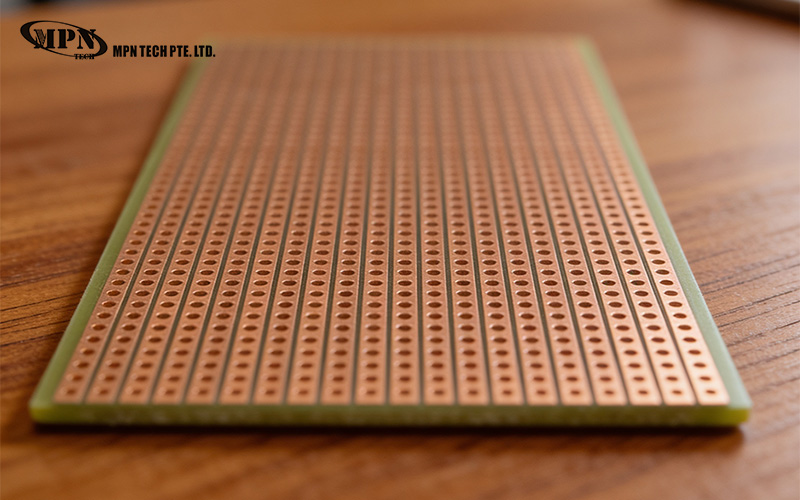
These boards require soldering and careful track planning. Mistakes are harder to fix once tracks are cut or components are soldered. They also offer less layout flexibility compared to perfboards because the copper strips guide how connections are formed.
Key Features:
- Pre-connected copper strips form circuits
- The board requires cutting tracks for layout customisation
- It offers a structured design with reduced wiring
Prototype Circuit Board Functionality
How Do Prototype Circuit Boards Work?
Depending on the board type, these connections may be temporary or permanent. Breadboards rely on internal spring-loaded clips, while perfboards and stripboards rely on soldered joints and manually formed connections. In all cases, the prototype circuit board acts as a testing platform for circuit development.
1. Basic Functionality
Prototype boards allow users to build, test, and iterate on electronic circuits before finalising a design. Components are connected using jumper wires, sockets, or soldered joints, depending on the board type. These electronic circuit testing boards are useful for both learning and professional validation before moving into formal PCB design workflows.
Breadboards use spring-loaded connections, which allow components and jumper wires to be inserted without soldering. Meanwhile, perfboards and stripboards require manual soldering, which creates stronger and more permanent connections. Each method supports different levels of flexibility, durability, and realism in testing.
2. Connection Methods: Soldered vs. Spring-Loaded
Solderless breadboards use quick, reusable connections. They are ideal for experimentation because components can be repositioned easily. This is helpful when users are still testing component values, checking signal flow, or learning how a circuit behaves.
Soldered boards, such as perfboards and stripboards, use permanent connections. These are more reliable for semi-final builds because soldered joints are less likely to loosen during handling. A soldered prototype circuit board may also behave more like a final circuit because its connections are firmer and more stable.
3. Role in Iterative Design
Prototype boards enable testing multiple versions of a circuit. Users can make changes, compare different layouts, replace components, and observe how each revision performs. This supports iterative design, where each version of the circuit becomes more refined.
A prototype circuit board is useful for identifying issues early. These may include poor grounding, unstable connections, overheating, incorrect component values, or layout problems. Fixing these issues during prototyping is usually easier and cheaper than correcting them after production.
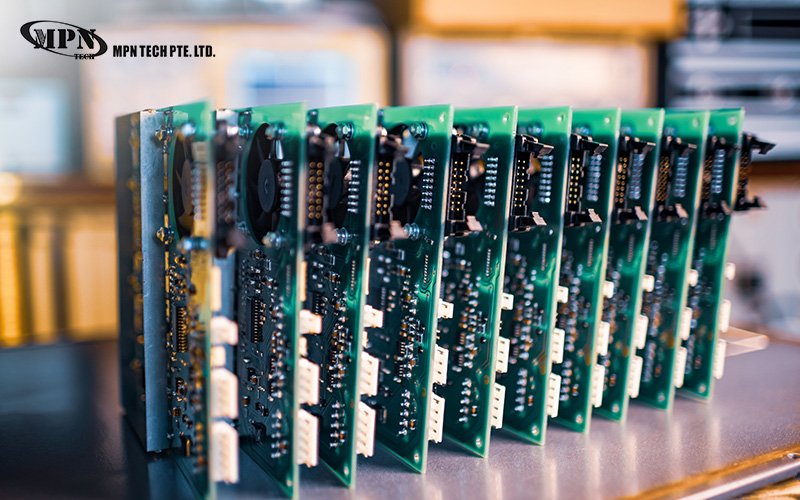
Prototyping also validates performance before production. Once a circuit has been tested successfully on a prototype board, it can be developed into a custom PCB layout. At that point, teams may work with manufacturing partners or PCB design companies in Singapore to prepare a board suitable for final assembly.
How to Choose a Prototype Circuit Board
Choosing the right prototype board depends on the purpose of the project, the stage of development, and the user’s experience level. It should support testing without creating unnecessary complexity. The following factors can help guide the choice.
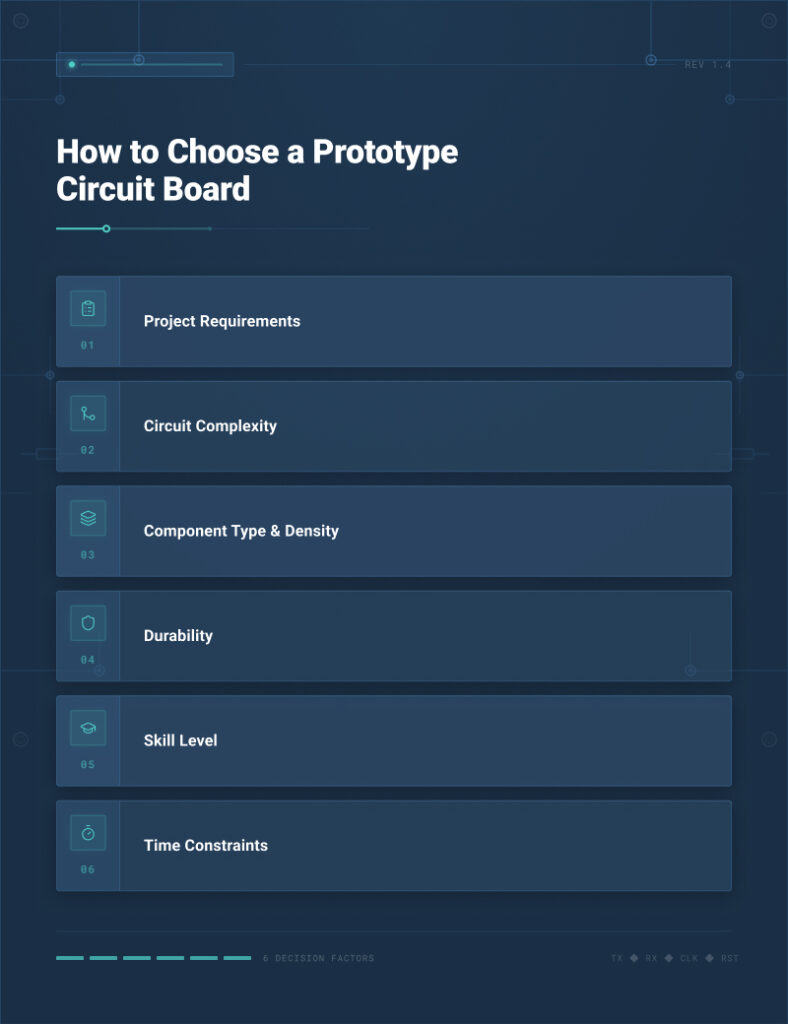
1. Project Requirements
Users should choose between temporary and semi-permanent setups based on the project goal. A temporary setup is best when the design is still changing, and quick adjustments are needed. A breadboard is usually the most suitable choice for this stage.
On the other hand, a semi-permanent setup is better when the circuit has already been tested and needs a more stable build. Perfboards and stripboards are useful when the prototype needs to be handled, demonstrated, or used for extended testing.
2. Circuit Complexity
Simple circuits can often be tested on breadboards. These may include LED circuits, sensor tests, button inputs, microcontroller experiments, or basic analogue circuits. A breadboard offers enough flexibility for quick changes.
Complex or power-heavy circuits may need solderable boards for better durability. Circuits involving higher currents, many components, sensitive signals, or compact layouts may not perform reliably on a breadboard. In these cases, a soldered prototype circuit board can provide more dependable connections.
3. Component Type & Density
Board size, spacing, and layout flexibility matter when selecting a protoboard. Some components may fit easily into a breadboard, while others may require adapters, headers, or custom spacing. Larger components may also need stronger mechanical support.
Perfboards and stripboards allow more layout control, especially when users need to fit several components into a smaller space. A dense prototype circuit board layout should still allow enough room for testing, soldering, and troubleshooting.
4. Durability
Soldered connections are more robust and reliable for long-term use. This makes perfboards and stripboards suitable for prototypes that need to be transported, demonstrated, or used repeatedly over time.
In contrast, breadboards are more fragile and may loosen with repeated use. Over time, the internal clips may lose grip, causing intermittent connections. For quick testing, this may not be a serious issue, but for longer validation, a soldered prototype circuit board is often more practical.
5. Skill Level
Breadboards suit beginners because no soldering is required. They allow users to learn circuit basics, test components, and understand electronic behaviour without needing advanced tools.
However, perfboards and stripboards require experience with soldering and layout planning. Users need to understand how to form connections, avoid shorts, and maintain clean joints. These boards are better suited for intermediate to advanced users who want more permanent prototypes.
6. Time Constraints
Breadboards allow fast prototyping and testing. A circuit can be assembled, changed, and disassembled quickly, which is useful when time is limited or when the design is still uncertain.
Soldered boards take longer but offer more realism in circuit behaviour. A perfboard or stripboard build may require careful planning, soldering, testing, and rework. However, the extra time can be worthwhile when the prototype needs stronger connections or closer behaviour to a final circuit.
How to Plan Your Protoboard Build
A prototype circuit board with poor layout can waste components, increase wiring errors, and make testing less useful. Well-planned layouts ensure better circuit performance and cleaner builds. Good spacing can reduce accidental shorts, improve airflow, and make components easier to access. It also prepares the design for possible transition into final PCB development or electronic PCB assembly. Planning also supports future revisions. If the layout leaves room for testing points, replacement components, or additional modules, the circuit can be modified more easily.
Circuit design software can be used to visualise layouts and simulate circuits before building. These PCB prototyping planning tools help users check component placement, wiring routes, connection logic, and possible mistakes. For hands-on planning, graph paper can be used to map hole positions, connections, and components. This simple method is useful when working with stripboards, where copper tracks must be cut at specific points.
When it comes to effective PCB prototyping planning, users should select software compatible with their board type, especially for perfboard or stripboard layouts. Different board styles have different connection patterns, so the planning method should match the physical board.
For stripboards, the layout should clearly indicate where copper tracks need to be cut. Missing a track cut can create unintended connections, while cutting the wrong track can interrupt the circuit. Revisions should also be kept in mind. A good prototype circuit board layout leaves practical access for testing and modifications.
Frequently Asked Questions
1. What’s the difference between a breadboard and a prototype circuit board?
A breadboard is a solderless type of prototype board, ideal for quick and temporary setups. Other prototype boards, like perfboards or stripboards, require soldering and are more suitable for semi-permanent or permanent prototypes.
2. Can I reuse a prototype circuit board?
Yes. Breadboards can be reused multiple times. Perfboards and stripboards are less reusable since components are soldered in place, but they can sometimes be repurposed if carefully desoldered.
3. Do I need to know how to solder to use a prototype circuit board?
It depends on the type. Breadboards don’t require soldering, making them beginner-friendly. Meanwhile, perfboards and stripboards require soldering and are more suitable for intermediate to advanced users.
Conclusion
A prototype circuit board is one of the most useful tools in electronics development because it allows designs to be tested, improved, and validated before final production. Breadboards, perfboards, and stripboards each serve different needs, from quick solderless experiments to more durable semi-permanent builds. Choosing the right board depends on project requirements, circuit complexity, component density, durability, skill level, and available time.
Planning also plays a major role in successful prototyping. A well-organised layout reduces errors, improves testing, and makes future revisions easier. Whether a user is building a simple learning circuit or preparing a design for final manufacturing, prototyping provides the practical feedback needed to improve circuit quality before moving into formal PCB design with a trusted PCB supplier in Singapore.
For teams moving from concept to production, partnering with the right PCB board manufacturer in Singapore can make development smoother. At MPN Tech, we provide same-day service, flexible customisation, an R&D-focused approach, and industry-leading capabilities. With our right technical support, each prototype circuit board can be refined more efficiently before progressing into the final PCB design and production.
Contact us and let us translate the tested circuit into a reliable, manufacturable board.
 MPN Tech