
Key Takeaways:
How Does the Printed Circuit Board HS Code Work?
- Bare PCBs are classified under HS Code 8534.00.00, which applies only to unpopulated PCBs.
- Once components are assembled, PCBs are classified based on their function, such as telecommunications, control systems, power conversion, or consumer electronics.
- Using the correct HS code supports smooth customs clearance, accurate documentation, and predictable duties and taxes.
Introduction
In the electronics industry, efficiency does not stop at design or manufacturing. For companies importing, exporting, or sourcing printed circuit boards (PCBs), regulatory accuracy plays a part in keeping projects on track. One area that is often overlooked until issues arise is the printed circuit board HS code. This code is a standardised international classification used in global trade to identify PCBs for customs purposes.
Understanding how PCBs are classified helps businesses avoid delays, penalties, and unnecessary costs. For instance, when sourcing a PCB prototype in Singapore for early-stage development, using the correct classification code ensures shipments are declared accurately and cleared efficiently.
What Is the Printed Circuit Board HS Code?
The Harmonised System Code (HS Code) is a standardised international classification used to identify traded goods. It is administered by the World Customs Organization and adopted by customs authorities worldwide. Each product is assigned a numerical code that determines how it is declared, taxed, and regulated at borders.
For PCBs, the code provides a clear and universally recognised way to identify bare PCBs during import and export. This standardisation ensures that customs authorities, logistics providers, and businesses are aligned on what is being shipped, reducing ambiguity in trade documentation.
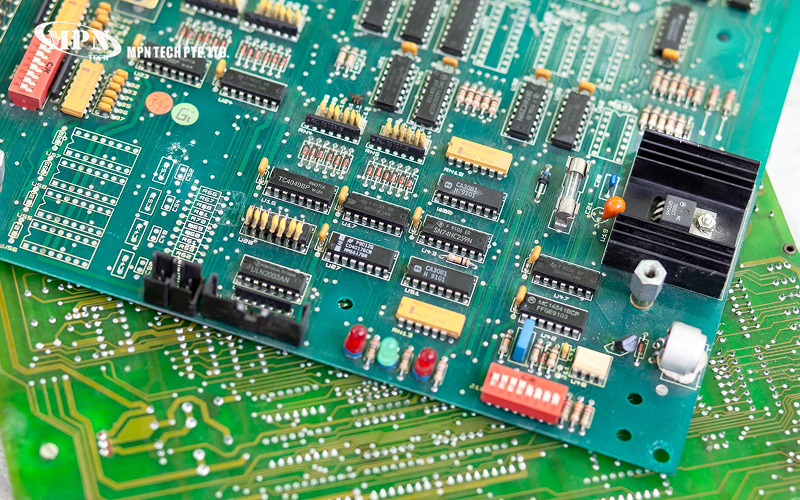
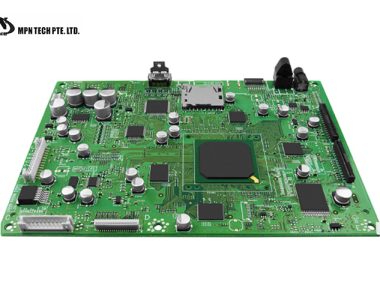
Bare PCBs are classified under HS Code 8534.00.00. This code applies specifically to unpopulated PCBs, meaning boards that do not yet have electronic components mounted on them. These are often used as the base for further assembly or as part of prototyping and small-batch production runs.
It is important to note that once components are assembled onto the board, the classification may change. Assembled PCBs can fall under different HS codes depending on their function and the type of electronic equipment they form part of.
1. Telecommunications Equipment PCBs
HS Code 8517
Used for assembled boards that form part of telecom devices, networking equipment, or communication systems.
2. Electrical Control Or Distribution Boards
HS Code 8537
Common for assembled PCBs used as control panels, machine controllers, or automation systems.
3. Power Supply Or Power Conversion Boards
HS Code 8504
Applies to assembled PCBs functioning as power supplies, adapters, or converters.
4. Consumer Electronics PCBs
Classified under the HS code of the finished product. For example, audio equipment, household electronics, or IT hardware.
Why the Correct HS Code Matters
1. Enables Smooth Customs Clearance
The correct classification helps simplify international trade. Customs authorities rely on HS codes to assess duties, apply regulations, and clear shipments. Errors can trigger inspections, reclassification requests, or temporary holds, all of which disrupt supply timelines.
2. Ensures Accurate Trade Documentation
HS codes are essential for accurate documentation. Commercial invoices, packing lists, customs declarations, and shipping forms all require the correct code. Inconsistent or incorrect information across documents increases the risk of compliance issues.
3. Supports Cost and Risk Control
Proper classification supports cost predictability. Duties and taxes are often calculated based on HS codes. Misclassification can result in unexpected charges or retrospective penalties, which are particularly disruptive for SMEs and project-based electronics teams.
As a major electronics and manufacturing hub, Singapore companies frequently deal with suppliers, customers, and manufacturing partners across multiple countries. Using the correct printed circuit board HS code ensures alignment across jurisdictions and reduces friction in cross-border transactions.
What are Some Practical Takeaways for Electronics Businesses?
As global trade requirements continue to evolve, staying informed about product classification is part of building resilient and professional electronics operations. Understanding the printed circuit board HS code is also about supporting smoother logistics, clearer communication with customs authorities, and more predictable project planning. For electronics companies operating in Singapore’s fast-paced manufacturing ecosystem, this knowledge helps reduce friction across the supply chain.
As a PCB board manufacturer in Singapore, MPN Tech supports both manual and automated PCB assembly, hybrid assembly for precision electronics, and IPC Class I, II, and III builds. Alongside manufacturing expertise, we help clients navigate practical considerations to keep their operations efficient, compliant, and free from avoidable delays.
Contact us to learn how we support you at every stage of the process.
 MPN Tech