PCB Design, Manufacturing &
Engineering Insights

Explore expert articles, technical guides, and industry insights to help you design, build, and optimise your PCB projects.
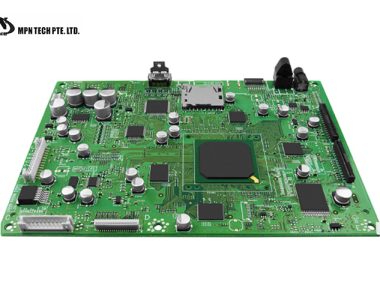
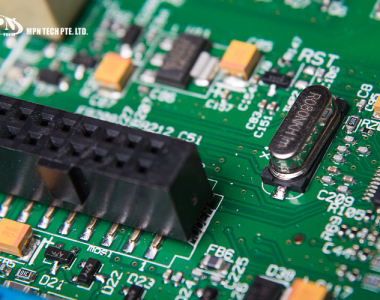
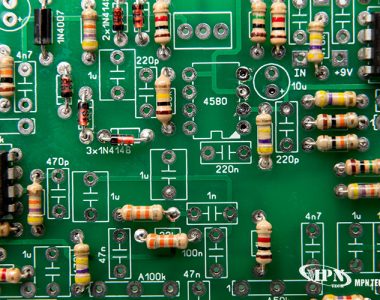
Close-up of green printed circuit board with labeled resistors, capacitors, diodes, and integrated circuits.

How to Make a PCB Layout

Designing a custom Printed Circuit Board (PCB) is a crucial step in turning a circuit idea into a reliable physical prototype. Understanding how to make a PCB layout correctly allows engineers, researchers, and product developers to move more efficiently from design to testing. Layout choices directly affect signal integrity, power stability, thermal behaviour, and overall board reliability. Addressing these factors early helps reduce electrical noise and maintain consistent performance across the board. This contributes to a more predictable and efficient transition from schematic design to physical validation. This guide explains the PCB layout process, with a focus on prototyping and research considerations.
Close-up of circuit board components undergoing PCB quality control.

An Overview of PCB Production Quality Control Process: X-ray and Other Non-Destructive Testing Methods

In modern electronics manufacturing, quality is defined as much by what cannot be seen as by what can. As circuit boards become more compact, multilayered, and functionally dense, ensuring reliability requires more than surface-level checks. When it comes to PCB production, quality control processes are designed to verify that every layer, joint, and connection performs as intended, even when defects are hidden from view. In this article, we examine the key inspection methods used in PCB quality control. Read on to understand the role each process plays at different stages of production.
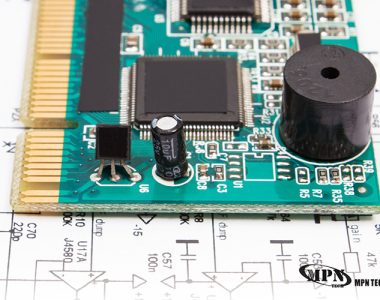
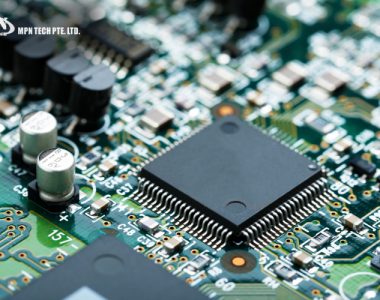
MPN Tech IC chipset showing pins for PCB compatibility.

What You Need to Know About PCB and IC Chipset Compatibility

When designing electronic systems for research or prototyping, the relationship between the PCB and the IC chipset plays a decisive role in whether a design performs as intended. Understanding how PCB design choices interact with integrated circuit chipset requirements helps bridge the gap between theoretical design and real-world performance. In this article, we examine how PCB and IC compatibility influences design accuracy, testing reliability, and overall system performance.
A macro view of an electronic circuit board showing significant pink crystalline corrosion or debris around a connector.

Common PCB Issues and How to Avoid Them

Printed Circuit Boards (PCBs) form the foundation of most electronic systems, providing the structure and connections that allow components to work together. From early-stage research prototypes to complex experimental hardware, PCBs play a part in determining how reliably a design performs and how efficiently it can be refined during development. Therefore, it is essential to understand common PCB issues and how they arise. Early identification of potential design or manufacturing challenges helps minimise rework and streamline troubleshooting. Keep on reading for further insights.
Colorful digital stock trading graph with technical indicators

Understanding Signal Integrity in PCBs: What It Is and Why It Matters

While a powerful processor is key to modern electronics, the smooth flow of electrical signals is just as important to ensure everything works as it should. No matter how advanced the chipset or how compact the design, if signals become distorted or delayed while travelling through the printed circuit board (PCB), the overall system performance can be compromised. One crucial factor in this process is signal integrity—how clean and reliable the electrical signals are as they move through the PCB. It plays a part in maintaining the proper functioning of electronic devices. So, what does signal integrity do, and why is it essential for device reliability? Read on to gain deeper insights.
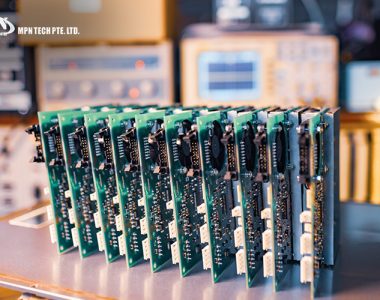
MPN Tech technician assembling a full production PCB batch.

Key Differences Between Printed Circuit Board Prototyping and Full Production

In electronics development, the path from an initial idea to a market-ready product involves more than just designing a circuit. Understanding how each stage of the process works is essential for building reliable and manufacturable electronics. Two of the most critical phases here are printed circuit board (PCB) prototyping and full production. While both involve manufacturing PCBs, they address very different needs. In this article, we examine how prototyping and full production serve distinct purposes.
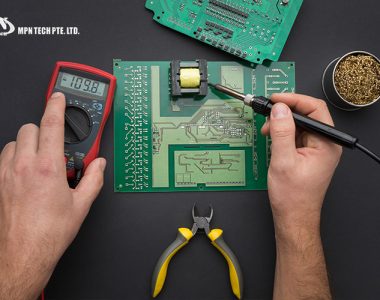
A person uses a soldering iron and multimeter probe on a green circuit board.

An Introduction to PCB Design: What It Involves and How It Optimises Electronics Performance

From consumer gadgets to advanced industrial systems, modern electronics rely on carefully engineered Printed Circuit Boards (PCBs) to function reliably. As devices become smaller, faster, and more complex, PCB board design plays a key role in ensuring performance, reliability, and long-term durability. In this article, we examine what the PCB board design process involves and how it supports the development of high-performing electronic systems.
PCBA manufacturing process using robotic assembly arms and PCB.

How PCBs and PCBAs Drive Innovation in Electronics Manufacturing

The Printed Circuit Board (PCB) and Printed Circuit Board Assembly (PCBA) form the backbone of electronic innovation. Serving as both the mechanical support and electrical link for components, they make it possible to design devices that are more compact and reliable. From laboratory prototypes to industrial systems, PCBs and PCBAs enable the precise electronic component integration and efficient embedded system design. This article examines the role of PCBs and PCBAs in advancing electronics manufacturing.
What to Consider When Choosing Flex and Rigid-Flex PCBs

What to Consider When Choosing Flex and Rigid-Flex PCBs

Flex and rigid-flex PCBs (Printed Circuit Boards) play a part in powering today’s innovative electronic designs. Unlike traditional rigid boards that are limited by space constraints and mechanical stress, these advanced PCBs offer adaptability, strength, and reliability. Their ability to bend, fold, and integrate seamlessly into compact enclosures allows engineers to create smaller, lighter, and more efficient devices. This guide breaks down how each type works, its unique advantages, and how to choose the best option for your next project.

Let’s Build Your Next Project

Ready to start your PCB project in Singapore? Partner with MPN Tech for reliable, high-quality PCB and PCBA solutions.